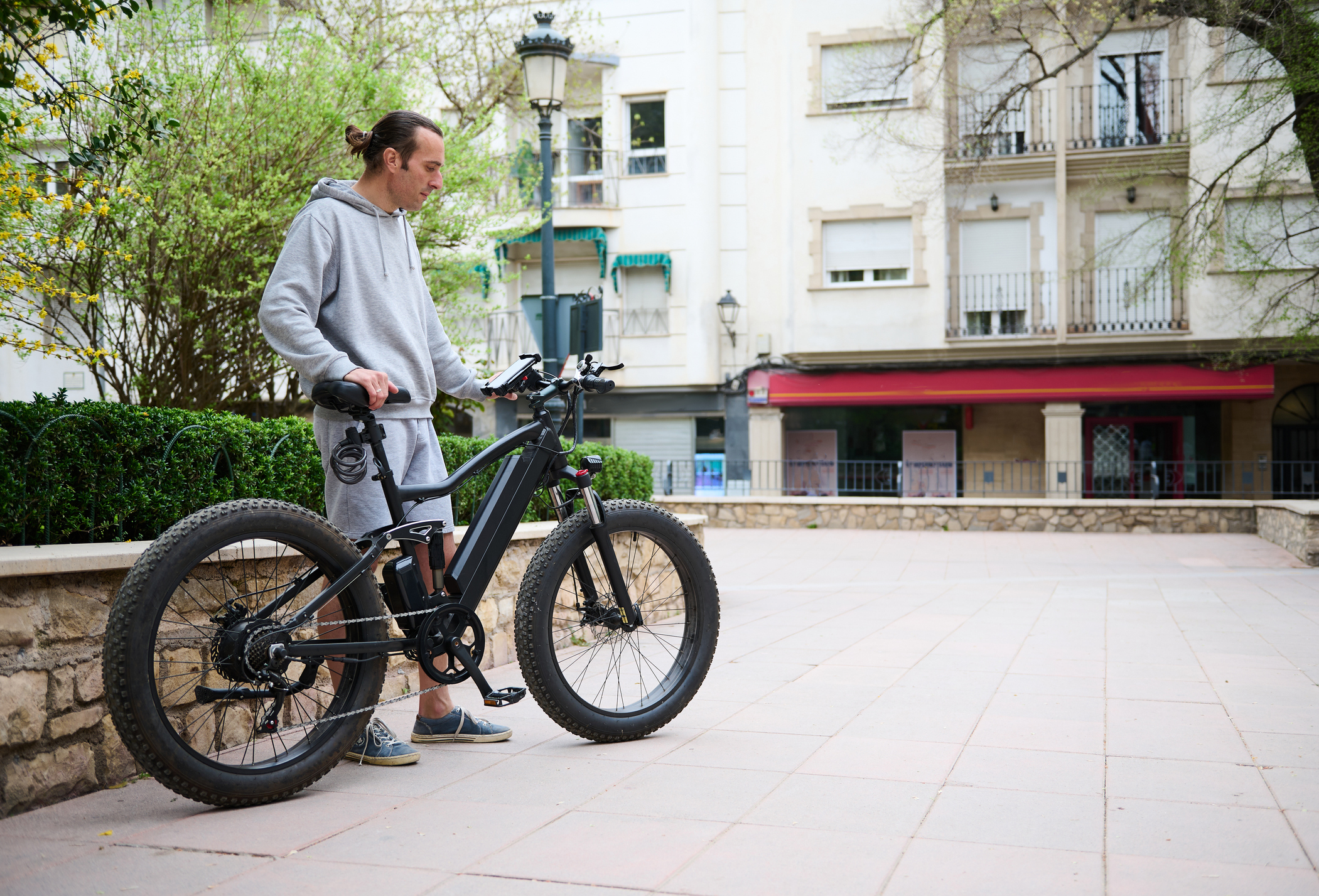
How much does an e-bike? Everything You Need to Know about weight
You'd like to get an e-bike and are wondering: How heavy is such a bike actually weigh, and can I handle it reasonably well in everyday life? These are valid questions, because the weight of an e-bike affects how it rides, how you transport it, and whether you can, for example, carry it into the bike storage room without any trouble.
Most e-bikes weigh significantly more than regular bikes. The reason for the extra weight how heavy individual e-bikemodels are, and what the weight means for you when riding, you can find out here.
How much does an e-bike weigh on average?
E-bikes or pedelecs weigh an average of 20 to 28 kilograms, making them comparatively heavy. A classic bicycle without a motor weighs, depending on type of bicycle , weighs about 10 to 17 kilograms, while a mountain bike weighs an average of 12 to 14 kilograms, and a road bike often weighs only 7 to 9 kilograms. The difference in weight stems from three components: the motor, the battery, and the reinforced frame construction, which must support the additional weight.
However, depending on the intended use, design, and configuration, there are also differences in weightdifferences in weight e-bike. The following table shows typical weightranges by e-biketype:
E-bike-Type | Average Weight |
E-City Bike/E-Trekking Bike | 22–26 kg |
Electric Mountain Bike (E-MTB) | 20–25 kg |
E-Road Bike/E-Gravel Bike | 12–16 kg |
Electric cargo bike | 30–45 kg |
Lightweight E-Bike/Light E-Bike | 12–16 kg |
E-mountain bikes are built to be particularly rugged in order to withstand the rigors of off-road riding. Nevertheless, they are often slightly lighter than e-trekking bikes because manufacturers specifically focus on weight-optimized frames and components for e-MTBs. E-cargo bikes represent the other extreme—with a cargo box and reinforced frame, they can easily weigh 35 kilograms or more. Lightweight e-bikes typically optimize one or more factors that make other e-bikes heavier: they feature carbon frames instead of aluminum, use a “small” battery, and/or do without heavy suspension systems.
Why are e-bikes so heavy?
The extra weight compared to a standard bicycle is distributed primarily across three areas:
Motor: 2 to 4 kilograms
Mid-drive motors from Bosch, Shimano, or Brose weigh between 2.5 and 4 kilograms. Hub motors are sometimes lighter, but offer a different riding experience. Modern versions like the Mahle X20 weigh only 1.3 to 1.4 kilograms—though they deliver less torque. As a result, they are used relatively rarely.
Battery: 2 to 4 kilograms
The weight of an e-bike battery depends directly on its capacity. A 500-Wh battery weighs about 2.5 to 3 kilograms, and a 750-Wh battery weighs about 3.5 to 4 kilograms. More capacity means more range, but it also means more weight, because more cells are built into the battery. If you want to know how battery capacity affects range, you’ll find all the details in our guide to battery range and capacity.
Frame and components: 2 to 4 kilograms extra
The motor and battery generate additional forces and vibrations that the frame must withstand. That is why e-bike manufacturers use sturdier tubes, reinforced welds, and more robust wheels. The brakes are also more powerful: Hydraulic disc brakes are standard on e-bikes.
How much does an e-bike weigh without the battery?
Do you remove the battery from the total weight , you’ll end up with most e-bikes between 17 and 24 kilograms. This weight is important to consider when you’re choosing your pedelec up stairs on a regular basis. Many batteries can be removed in just a few simple steps. That way, you can carry the battery first and then the bike—or vice versa. This makes transporting it much easier.
E-Bike Weight Limit: What is the maximum load capacity for an e-bike?
Every pedelec has a permissible total weight, sometimes also referred to as the system weight. This value includes the weight of the e-bike including the motor and battery, plus the rider’s weight, additional equipment, and luggage. Typical values range from 110 to 150 kilograms. Some models are rated for up to 170 kilograms, but these usually also have a higher curb weight.
What does this mean for you when riding an e-bike?
Calculate it this way: Permissible total weight minus e-bike weight minus luggage equals your maximum body weight. For an e-bike weighing 25 kilogramsweight and a system weight of 130 kilograms, that leaves 105 kilograms for your body weight—minus your backpack, additional gear, or groceries.
If you weigh more than 100 kilograms, be sure to look for e-bike models with a higher maximum weight capacity when choosing an e-bike. You can find this information in the manufacturer’s spec sheet or directly at one of the more than 5,000 specialty stores in the eurorad network.
How much should an e-bike weigh?
The general answer: As light as possible, as heavy as necessary. A lighter e-bike handles more nimbly, is easier to transport, and tends to use less battery power. But lightweight construction comes at a price—e-bikes with carbon frames and compact motors often cost significantly more.
For everyday use, an e-bike with a weight between 22 and 25 kilograms is perfectly adequate. If you have to carry the bike up several flights of stairs every day or maneuver it a lot, you should specifically look for models weighing less than 20 kilograms. For athletic off-road use, e-mountain bikes with a weight of 20 to 23 kilograms offer a good balance between stability and handling.
Your Dream E-Bike Through Dienstrad Leasing
Whether it's a lightweight e-road bike or a rugged e-MTB—with the Dienstrad leasing from eurorad, you can save up to 40% compared to buying outright. You choose the bike of your choice from one of over 5,000 specialty dealers and sign the lease agreement through your employer. The monthly payment is deducted directly from your gross salary. On top of that, you get comprehensive insurance coverage that covers repairs, wear and tear, and theft—and starting with the Premium package, there’s even no deductible.
Calculate Your Lease Payment Now
Frequently Asked Questions About Weight of e-bikes
How much does an e-bike weigh compared to a regular bike?
A standard bicycle usually weighs between 8 and 17 kilograms, depending on the type—mountain bikes weigh 12 to 14 kilograms, and road bikes weigh 7 to 9 kilograms. E-bikes weigh about 8 to 12 kilograms more due to their motor, battery, and reinforced frame.
How much does an e-bike battery weigh?
A typical e-bike battery weighs between 2 and 4 kilograms. The exact weight depends on the capacity: 250-Wh batteries for hub motors are lighter, while 750-Wh batteries for long rides are heavier. On most models, the battery can be removed for carrying and charging.
How much does the lightest e-bike weigh?
The lightest e-bikes on the market weigh, depending on frame size , weigh around 10 to 12 kilograms. These are mostly e-road bikes or lightweight e-bikes with carbon frames and compact motors. These e-bikes are primarily powered by muscle power; the motor usually serves as a backup for particularly steep hills or strenuous rides. For everyday use, e-bikes with a weight of 15 kilograms or more are a good choice.
What is the maximum weight an e-bike can carry?
The permissible total weight varies depending on the e-bikemodel. This figure includes the bike itself, all luggage, and, of course, your weight as rider of the e-bike. You can find the exact specification in your e-bike’s data sheet or ask your dealer.
Is the weight of an e-bike listed with or without the battery?
Manufacturers specify the weight of the e-bike , usually including the battery. It’s still worth checking the weight without the battery —especially if you have to carry the bike regularly and want to remove the battery when doing so.
How much does an e-mountain bike weigh?
E-mountain bikes weigh an average of 20 to 25 kilograms. Lightweight hardtail e-MTBs tend to weigh around 20 kilograms, while full-suspension e-MTBs with large batteries can weigh 25 kilograms or more.