Types of Bikes: Which Bike Fits Your Lifestyle?
You’re standing in a bike shop or scrolling through online stores, and it hits you: not all bikes are created equal. There are city bikes, touring bikes, mountain bikes, gravel bikes, and e-bikes in all varieties—from cargo bikes to folding bikes. At first glance, the list of bike types seems overwhelming. But behind this diversity lies a simple idea: Today, there’s a bike perfectly suited for every purpose, every riding style, and every route.
The good news: You don’t have to be a bike expert to find the right bike model. A basic understanding of the different types of bikes will help you make a decision that will keep you happy for years to come—whether for your daily commute, relaxed weekend rides, or athletic off-road adventures. Here, you’ll learn about the different types of bikes available and what they’re suitable or unsuitable for.
Spoiled for Choice: When One Bike Suddenly Turns Into Twenty
Choosing the right bike depends on how and where you want to ride. While a city bike will take you comfortably through town, it’s out of place off-road. And while a road bike may be fast on the road, it’s not suitable for sandy dirt roads and bumpy forest trails. This overview shows you all the major types of bikes, along with their specific features, uses, and differences.
City Bike or Dutch Bike: Your Everyday Urban Companion
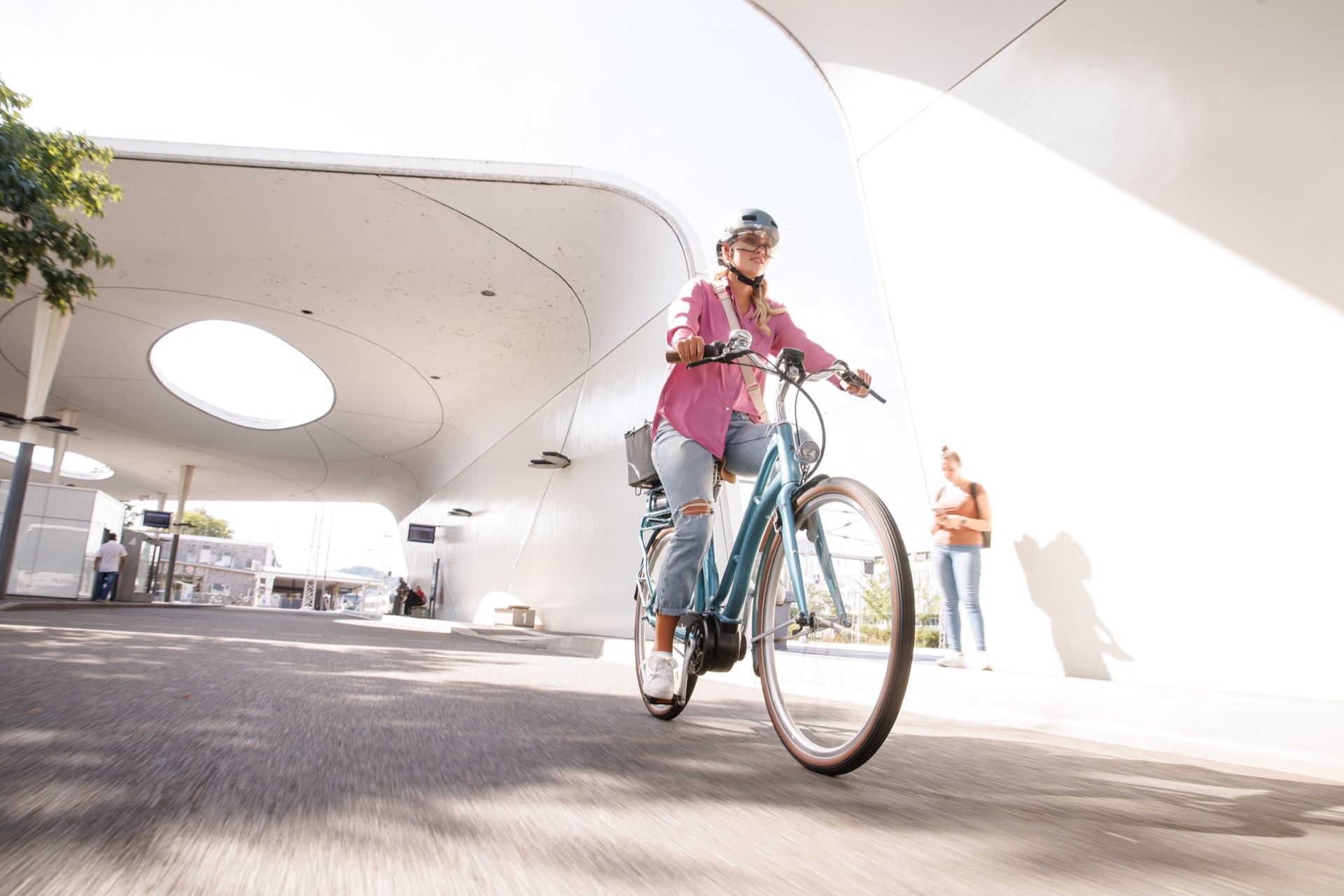
The city bike is the classic choice for short to medium distances in the city and on paved paths.
Typical characteristics:
- An upright, relaxed riding position thanks to the curved, high handlebars
- often low-step or wave frames for easy entry and exit
- Fully equipped: fenders, luggage rack, lights, chain guard
- In-hub gear system with 3–8 speeds (low-maintenance and weatherproof) or derailleur system with 2–3 front chainrings (for a wider gear ratio range)
- Tires: 28 inches with a smooth to slightly treaded tread surface
- Weight: 15–20 kilograms
City bikes or Dutch bikes are:
- Ideal for short trips of up to 10 kilometers, shopping trips, city driving, and relaxed cruising
- Not suitable for long trips, sporty driving, or unpaved roads
Trekking Bike: The Versatile All-Rounder
The trekking bike combines everyday practicality with touring capabilities and is an extremely popular type of bike, including for bike leasing.
Typical characteristics:
- A slightly forward-leaning, sporty yet still comfortable seating position
- Sturdy diamond- or trapezoidal frame (some models also feature a low-step design)
- 3×7–11-speed derailleur system for a variety of terrains
- Complete equipment for compliance with the StVZO
- Tires: 28-inch with a medium tread, slightly wider than those on a city bike (35–50 millimeters)
- often a suspension fork for a more comfortable ride, but this increases the weight
- Weight: 13–17 kilograms
Trekking bikes are:
- Ideal for active commutes of 10–30 kilometers, weekend rides, bike tours, and mixed terrain
- Not suitable for challenging terrain, competitive sports, or long tours without adequate training
Mountain Bike (MTB): for forests, mountains, and challenging terrain
Mountain bikes are designed for unpaved paths, trails, and technically challenging terrain. This type of bike can be further subdivided based on specific uses.
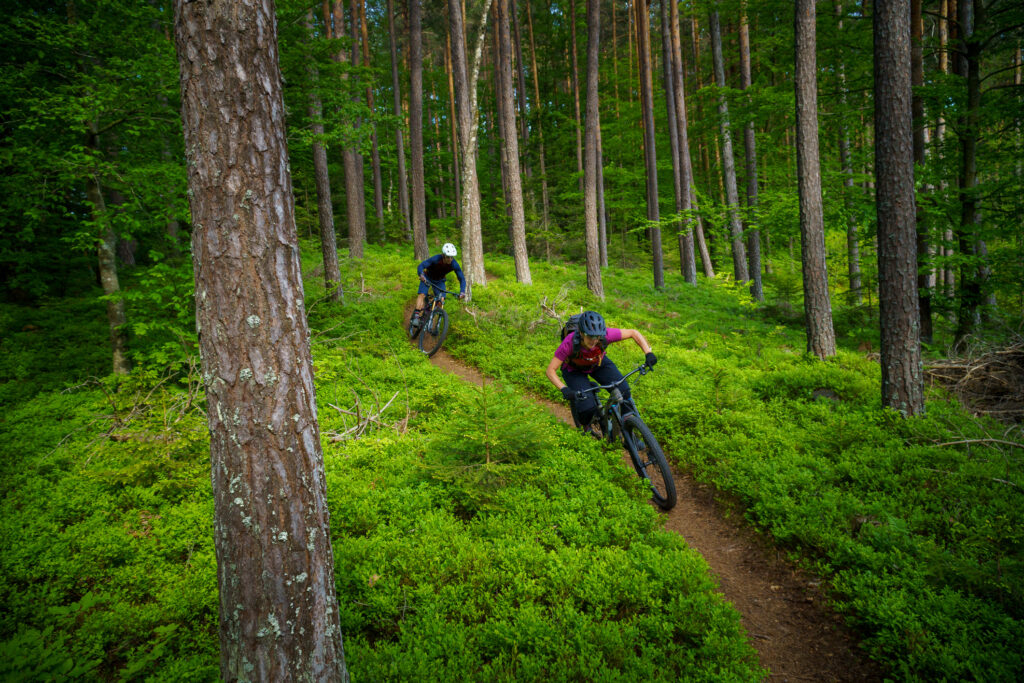
Typical characteristics:
- Sturdy frame construction made of aluminum or carbon fiber
- Hardtail (with suspension fork only) or Full-Suspension (full suspension with an additional rear shock)
- wide, deeply treaded tires (27.5 or 29 inches)
- Derailleur system with one front chainring and up to 13 gears
- mostly hydraulic disc brakes
- No street equipment (lights, fenders)
- Weight: 11–15 kilograms (depending on configuration)
MTB Variants:
- Cross-Country (XC): Lightweight, efficient, designed for fast off-road riding
- All-Mountain / Trail: a balance between uphill and downhill riding on mixed terrain
- Enduro: for challenging descents with more suspension travel
- Downhill: extremely durable for steep descents (very heavy; not suitable for regular trails or riding uphill)
Mountain bikes are:
- Ideal for forest paths, trails, mountain bike parks, and challenging off-road riding
- Not suitable for: long rides on asphalt, city traffic (without modifications)
Road Bike: Top Speed on Asphalt
Road bikes are optimized for maximum efficiency and speed on paved roads. Similar to mountain bikes, there are also specialized types such as aero bikes, time-trial (TT) bikes, and endurance bikes.
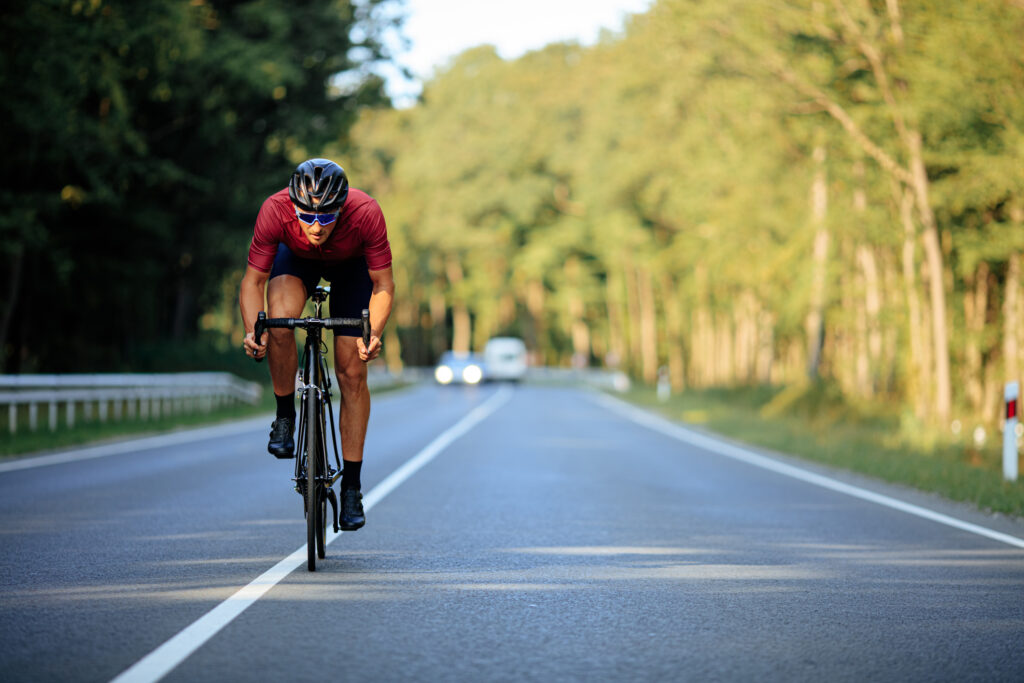
Typical characteristics:
- an aerodynamic seating position that leans sharply forward
- lightweight frame made of carbon or aluminum
- Racing handlebars (drop bars) with multiple grip positions
- narrow, smooth tires (23–28 millimeters) with high air pressure
- Derailleur system with 2×10–13 gears and exceptionally fine gear ratios
- No fenders, luggage racks, or lights
- Weight: 6–10 kilograms
Road bikes are:
- Ideal for sporty riding on asphalt, fitness training, and road bike races
- Not suitable for unpaved trails, everyday commuting with luggage, or wet conditions
Gravel Bike: The Versatile Adventurer
The gravel bike is a modern evolution that combines the DNA of a road bike with off-road capability.
Typical characteristics:
- Road bike handlebars with a sporty yet more relaxed geometry than those on a road bike
- wider tires than on a road bike (35–50 millimeters) with tread
- Disc brakes for greater control
- A sturdier frame with mounting points for a luggage rack and other accessories
- Derailleur with a wide gear ratio range
- Weight: 9–12 kilograms
Gravel bikes are:
- Ideal for rough asphalt and gravel paths, bikepacking, versatile tours, and commuting on mixed terrain
- Not really suitable for very technical trails or for use exclusively in the city
E-Bike Variants: Electric Assistance for All Types of Bicycles
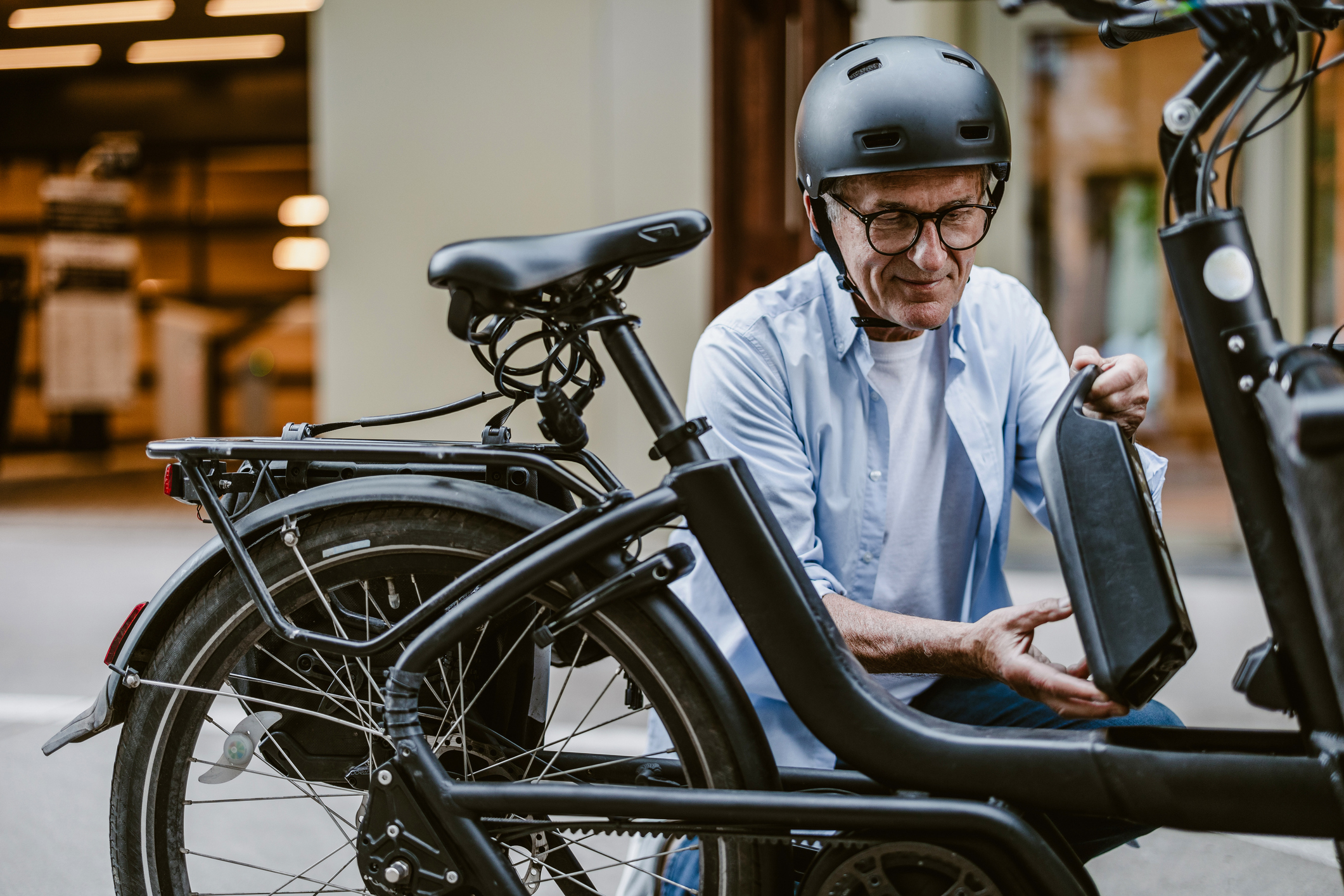
Today, virtually every type of bicycle is also available as an e-bike. The electric motor (maximum 250 watts) assists your pedaling up to a speed of 25 km/h. This significantly extends a bicycle’s range and versatility. That’s why e-bikes are particularly popular for leasing.

The Most Common Types of E-Bikes:
- E-Citybike: The comfort of a city bike with electric assistance for a relaxed, effortless ride
- E-trekking bike: perfect for longer commutes (10–50 kilometers) and tours
- E-mountain bike: lets you tackle even steep trails and go on longer rides in alpine terrain.
- S-Pedelec: While standard e-bikes (pedelecs) provide assistance up to 25 km/h and are legally classified as bicycles, S-Pedelecs (up to 45 km/h) must be insured and registered.
Special Wheels: For Special Requirements
Cargo Bike:
- for transporting children or loads weighing over 100 kilograms
- Available as a Long John (extended in the front), Long Tail (extended in the back), or tricycle
- usually as an e-bike with a large battery for better handling and range
Folding Bikes:
- Folds down compactly for combined travel (train & bike)
- mostly smaller wheels (16–20 inches)
- Ideal for commuters with space constraints
Cyclocross (CX):
- Similar to a road bike, but designed for cross-country racing
- a sturdier frame and tires with a deeper tread than those on a road bike
Overview: A Direct Comparison of Bicycle Types
|
Type of bicycle |
Seating Position |
Scope of Application |
Speed |
Comfort |
Weight |
|
City Bike |
upright |
City, Short Distance |
⭐⭐ |
⭐⭐⭐⭐⭐ |
heavy |
|
Trekking Bike |
slightly sporty |
Everyday Life + Trips |
⭐⭐⭐ |
⭐⭐⭐⭐ |
medium |
|
Mountain Bike |
athletic |
Terrain, Trails |
⭐⭐ |
⭐⭐ |
moderate-easy |
|
Road Bike |
very athletic |
Asphalt, Sports |
⭐⭐⭐⭐⭐ |
⭐⭐ |
very easy |
|
Gravel Bike |
athletic |
versatile |
⭐⭐⭐⭐ |
⭐⭐⭐ |
slightly |
Get the Perfect Bike with Company Bike Leasing
Whether it’s a high-quality e-trekking bike for the daily commute, a sporty gravel bike for weekend adventures, or a full-suspension mountain bike for endless trail adventures—with eurorad’s corporate bike leasing program, employees of companies with a framework agreement have access to all types of bikes and can save an average of 40 percent compared to buying them outright. The instant order option also gives self-employed individuals and small businesses with up to 50 employees access to bike leasing.
At over 5,000specialty retailers nationwide, you can thoroughly test ride all types of bikes and get expert advice—both in-store and online. The comprehensive insurance packages with no deductible protect your dream bike from day one—no matter which bike you choose.
Find your perfect bike and lease it with ease: Use the eurorad leasing calculator or ask your employer about company bike leasing options.
Equipment Required:
- Floor-standing pump with pressure gauge (for home use)
- Mini Pump with Pressure Gauge (On the Go)
- digital pressure gauge (highly accurate)
Step-by-step:
- Check tire pressure before driving (on cold tires)
- Remove the valve cap
- For Sclaverand valves: Unscrew the knurled nut
- Attach the pump head and read the pressure
- Re-inflate or let some air out
- Close the valve, put the cap on
Pro Tip: Write down your ideal settings on the pump. That way, you'll always have them handy.
Tire pressure and battery range are directly related
Even 1 bar too little increases rolling resistance by 15 percent. Specifically, this means that over a 50-kilometer distance, your motor will consume the equivalent of about 7.5 kilometers’ worth of additional energy. That’s an extra 75–90 watt-hours of energy consumption, which results in a shorter range.
Optimal tire pressure for an e-bike means:
- minimal rolling resistance
- maximum battery efficiency
- Longer battery life (fewer charge cycles)
- more kilometers per charge
Optimal tire pressure is therefore particularly important for e-bikes if you use the bike intensively: Proper maintenance preserves the bike’s components and maximizes its service life over its entire lifespan or lease period.
Special Considerations for E-Bikes in Winter
If you ride your bike in the winter, you should pay extra attention to your tire pressure.
- For every 10 °C drop in temperature: Reduce tire pressure by approximately 0.2 bar
- Check-ups recommended every 2 weeks
- Pump at a higher pressure to compensate for temperature-related losses
- In snow or ice: slightly reduced tire pressure for better traction
Recognizing Wear: When Do You Need New Tires?
Even with optimal tire pressure, e-bike tires wear out over time. This often happens faster than with non-motorized bicycles. The higher speeds, greater weight, and stronger driving forces put a strain on the material.
During your annual UVV safety inspections, one of the more than 5,000 specialty dealers in the eurorad network will, among other things, assess tire wear and replace the tires if necessary. However, even aside from this professional inspection, you should be aware of the warning signs and check your tires regularly.
|
Signs |
Need for Action |
|
Tread depth less than 1 mm |
Immediate change required |
|
visible cracks in the side walls |
Safety Risk: Replace Tires Immediately |
|
Frequent malfunctions despite correct pressure |
Tire damaged |
|
Carcass visible |
Structure damaged: Replace the tire immediately |
The Optimal Tire Pressure for E-Bikes: A Small Step, a Big Impact
Maintaining the correct tire pressure on your e-bike directly affects safety, comfort, range, and tire life. A monthly check takes only a few minutes, but ensures you get more kilometers per charge, better handling, and less wear and tear.
Follow the manufacturer's guidelines, adjust the tire pressure according to the weight and surface—and if you've leased an e-bike through eurorad, take advantage of the professional service network for optimal maintenance.